One system for a 30–100 bed hospital — OPD, wards, theatre, casualty, pharmacy, lab, billing and claims — with a dedicated database per hospital, AI that drafts every one of them while a named human always approves, and nothing sent without a signature. Built first for India's own complexity — ABDM-native, works when the internet doesn't, and it speaks Telugu — because software proven there travels anywhere.
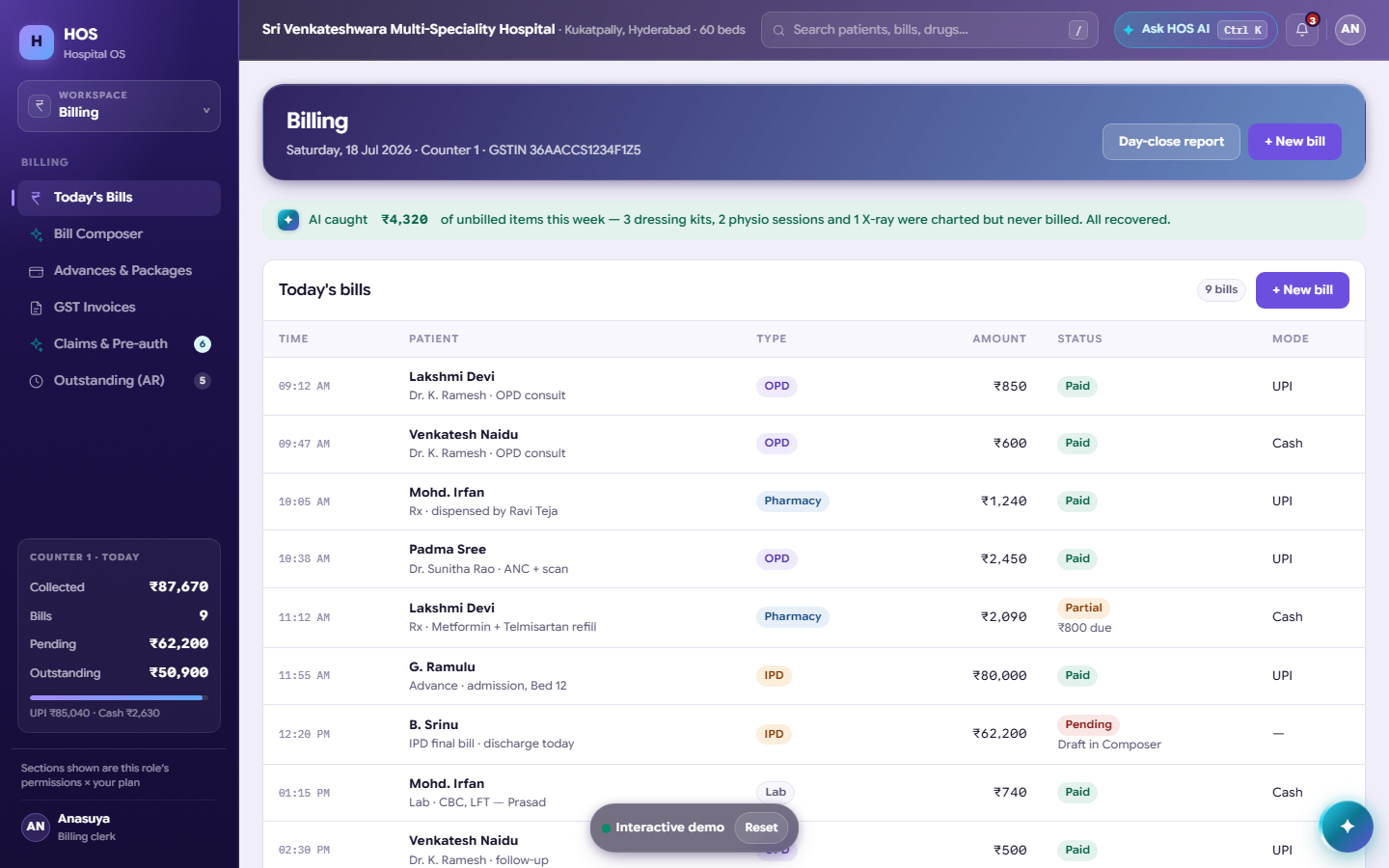
A 60-bed hospital loses money where nobody can see it — charges that were charted but never billed, claims that missed their filing window, follow-ups nobody called. HOS closes those gaps because it is the same system the clinical work happens in.
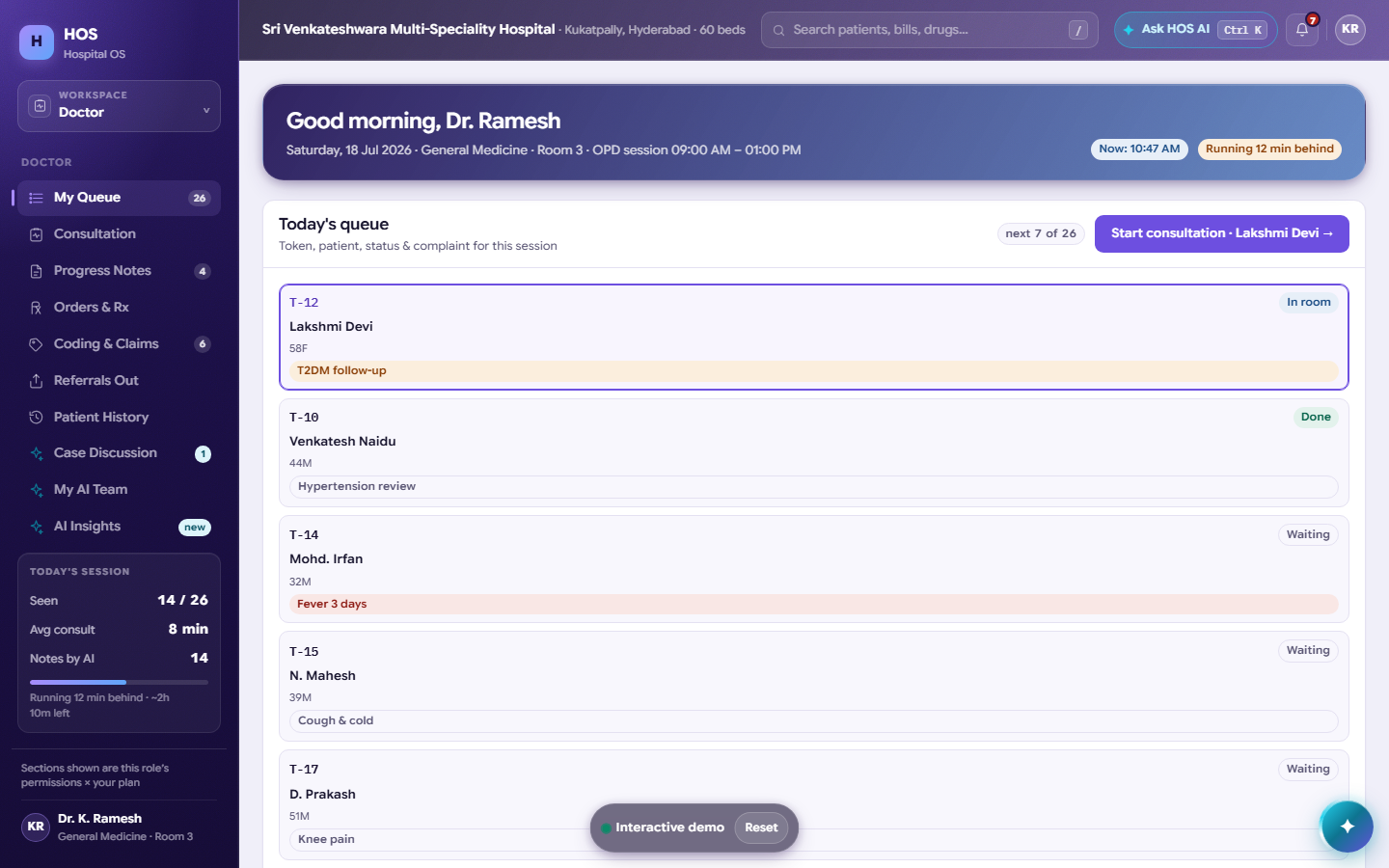
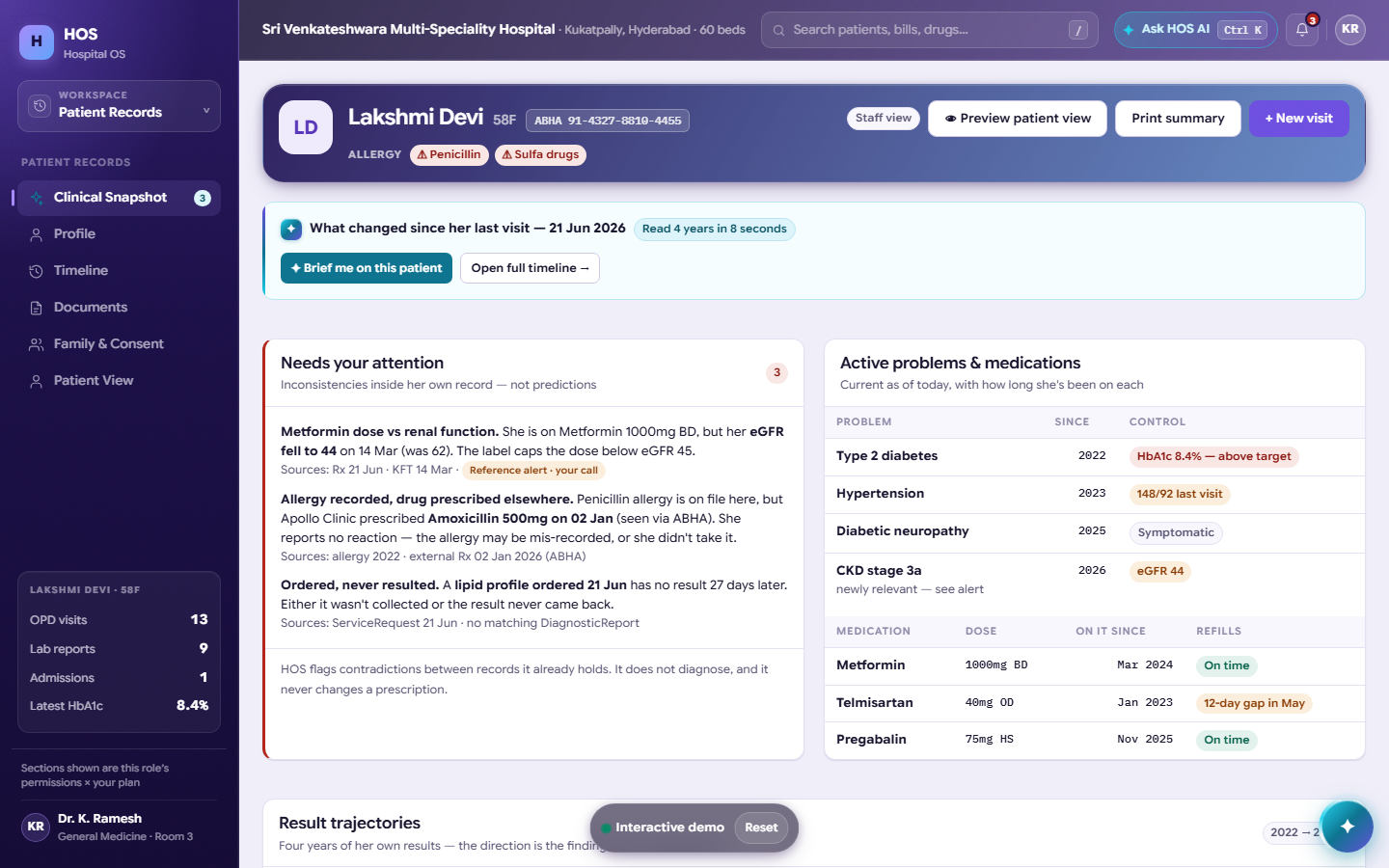
An Indian OPD consult is two to five minutes. It cannot start with reading a timeline. One screen says what changed, what contradicts, what's overdue — every claim linked to the record it came from.
PM-JAY gives you three days from discharge. IRDAI gives the insurer one hour to decide a cashless pre-authorisation, and three hours for final authorisation at discharge — two clocks on two different events, which is exactly why hospitals chase the wrong one. Miss a filing window and the hospital is non-compliant, not merely late — so the clocks sit at the top of the screen, each labelled with the event it actually runs from.
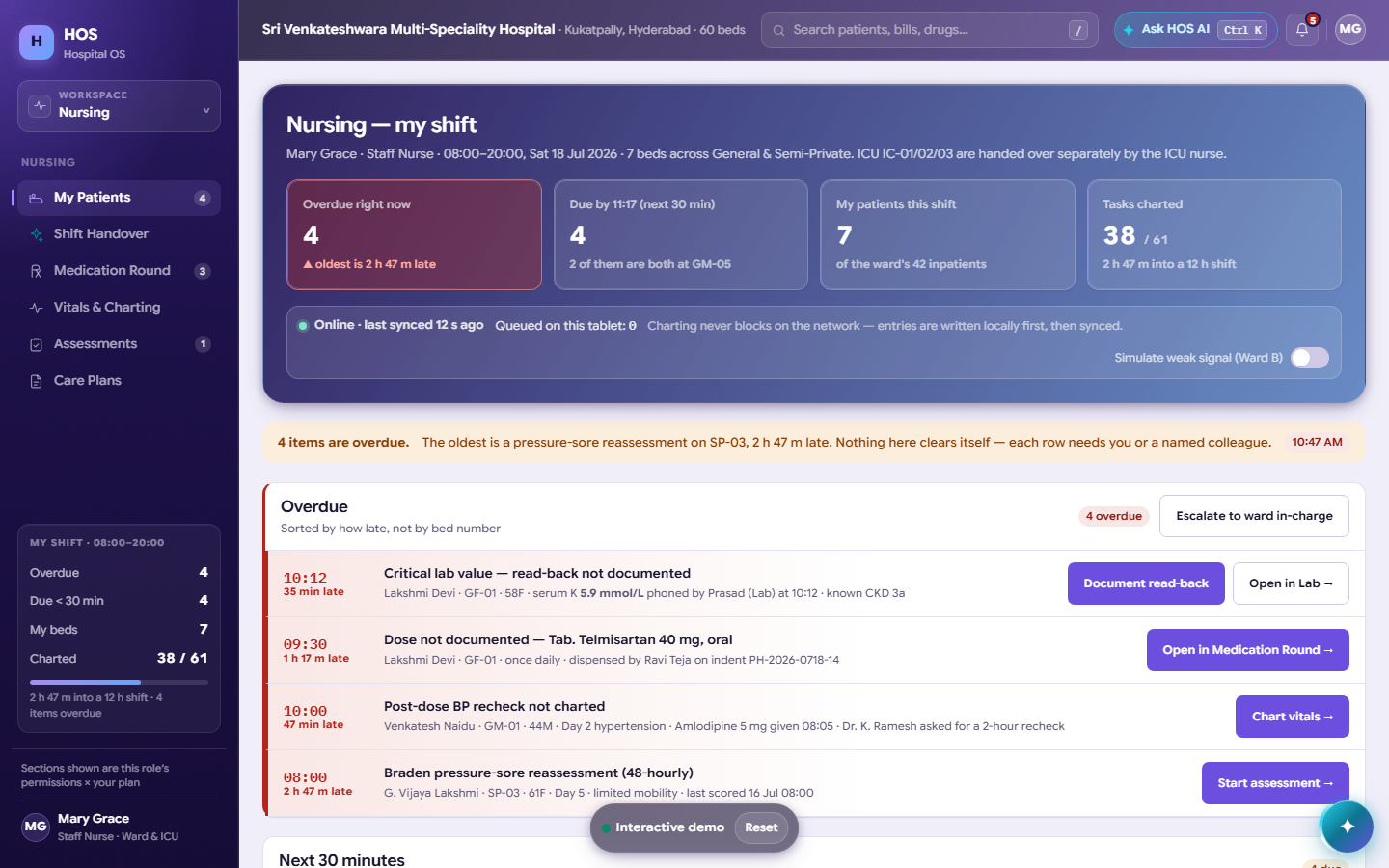
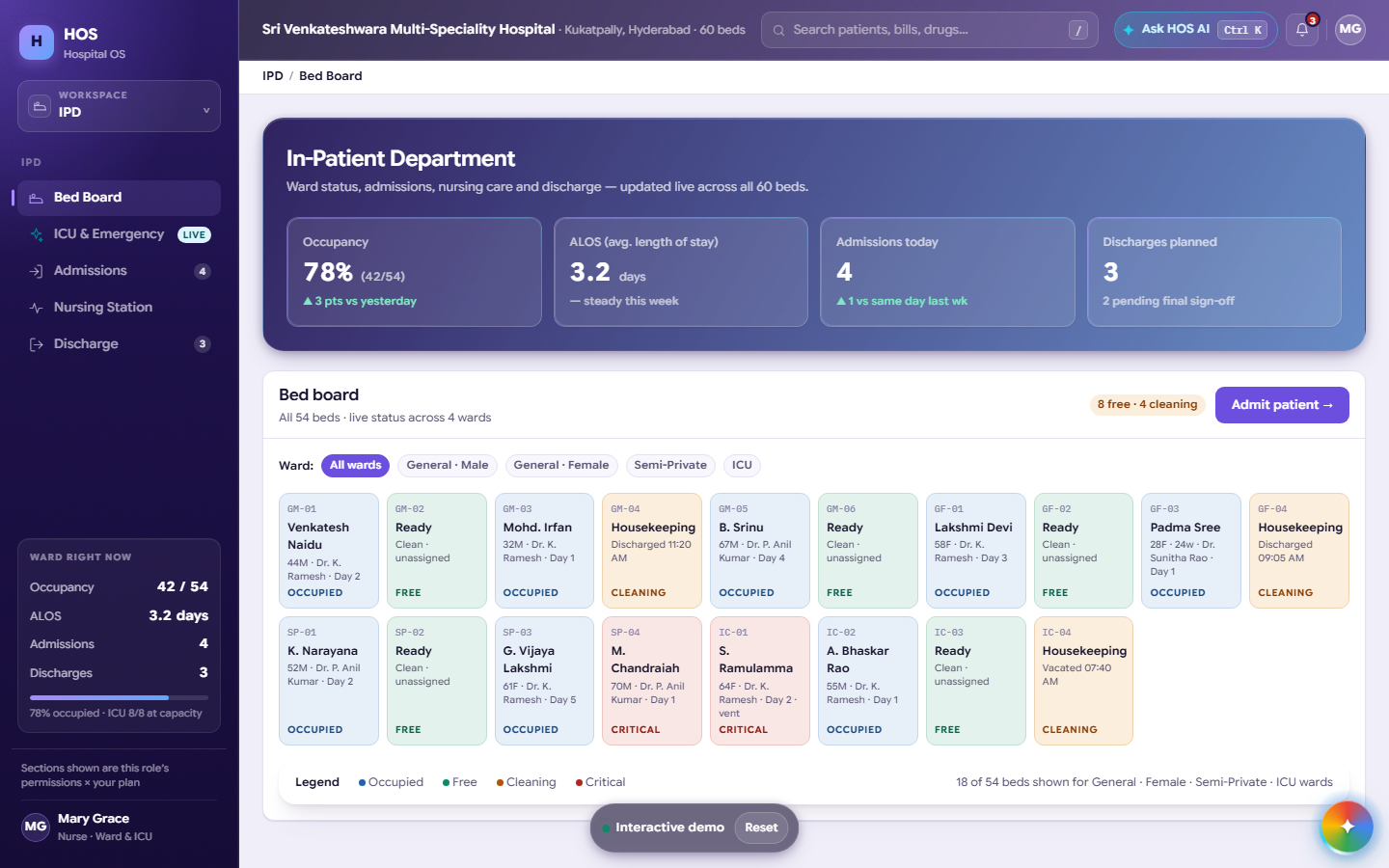
A doctor uses HOS for minutes per patient. A ward nurse uses it for a whole shift, on a low-end tablet, in a corridor with no wifi. If nursing is painful the hospital never really adopts the system — so nursing got its own workspace.
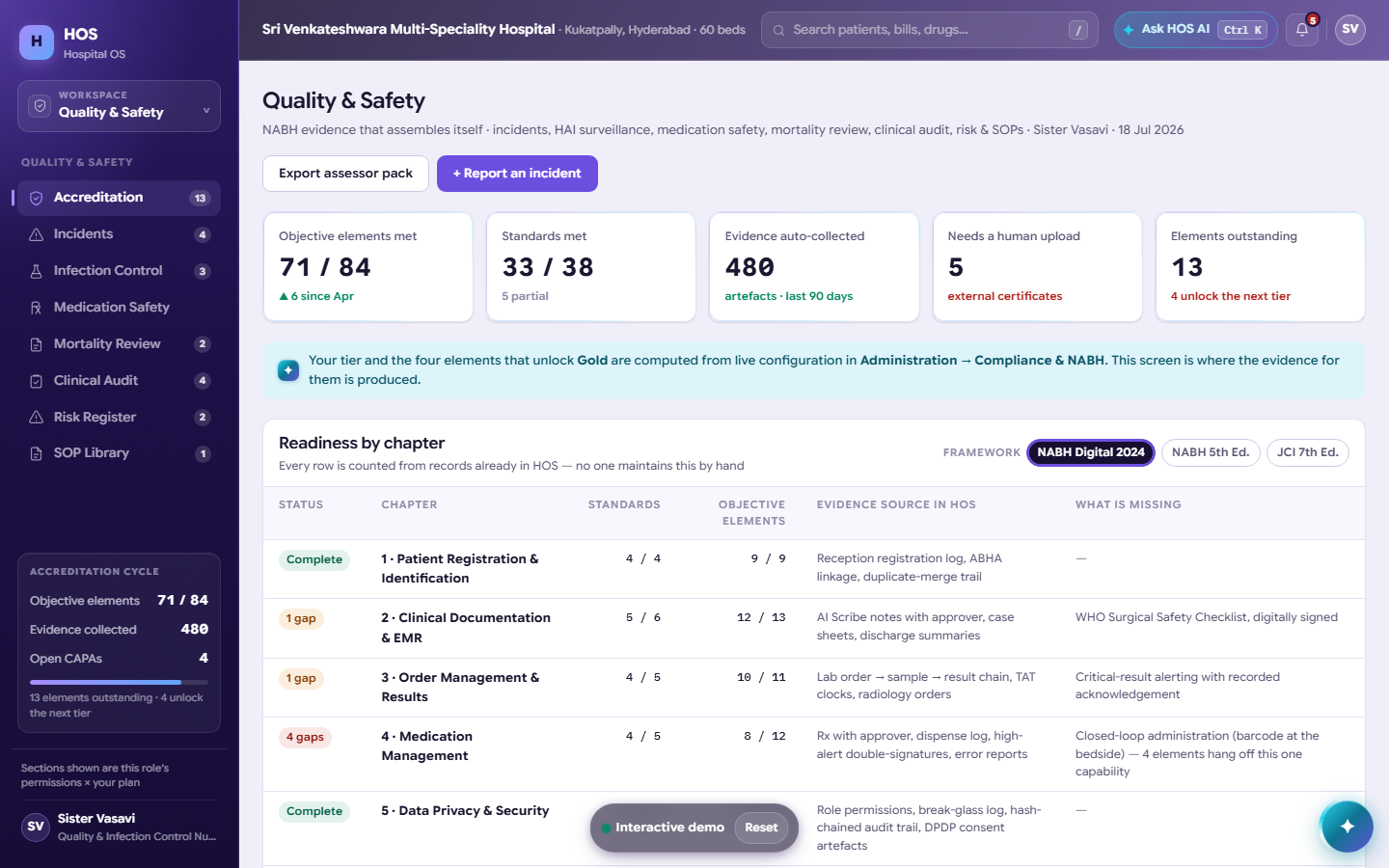
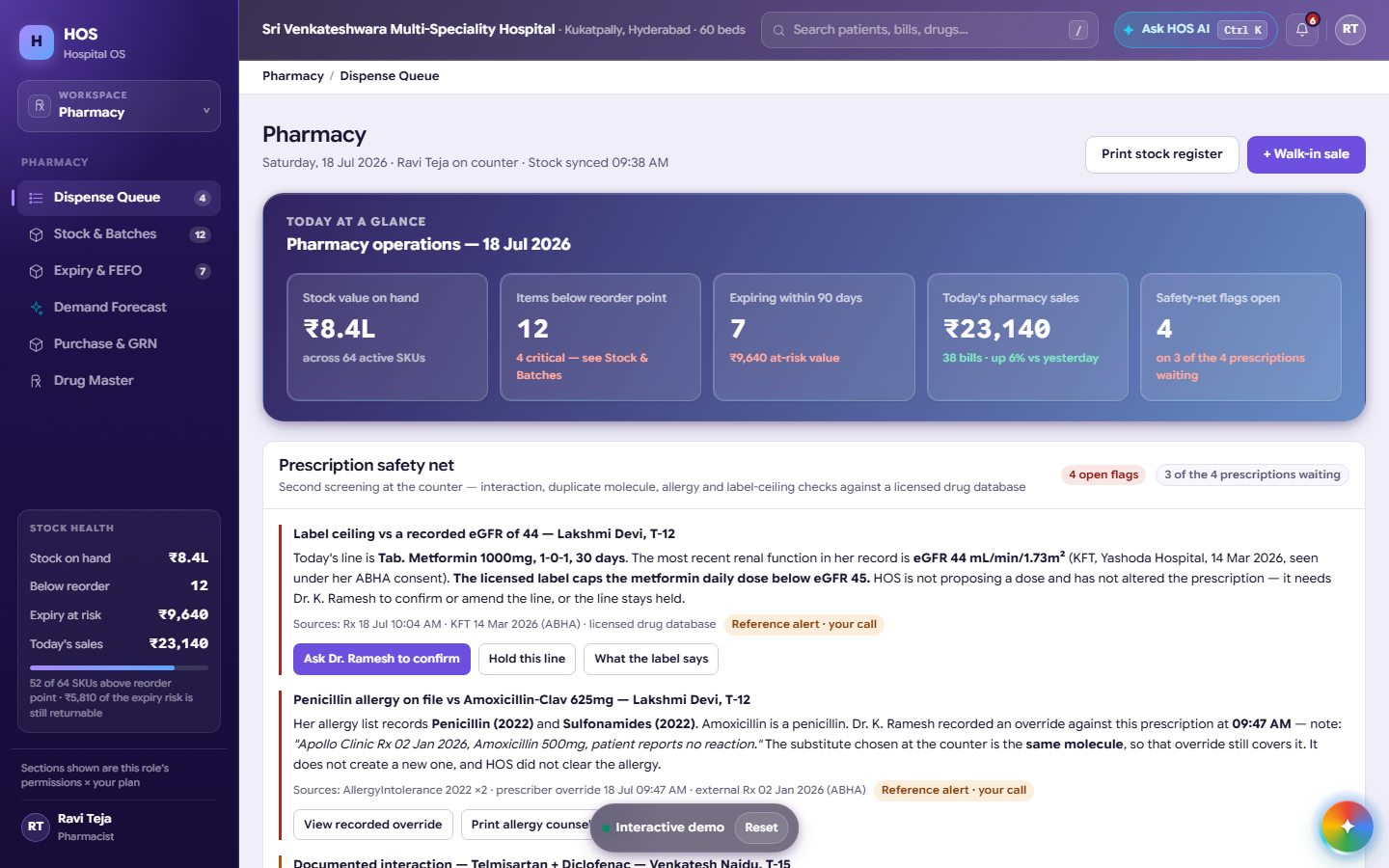
Fewer than half of surveyed Indian doctors believe AI helps with diagnosis and treatment — and they're right to be careful. Under India's CDSCO framework, software that predicts, screens, diagnoses or recommends a treatment is a medical device and needs a licence. So we publish which side of that line every feature sits on, inside the product, where your compliance officer can read it.
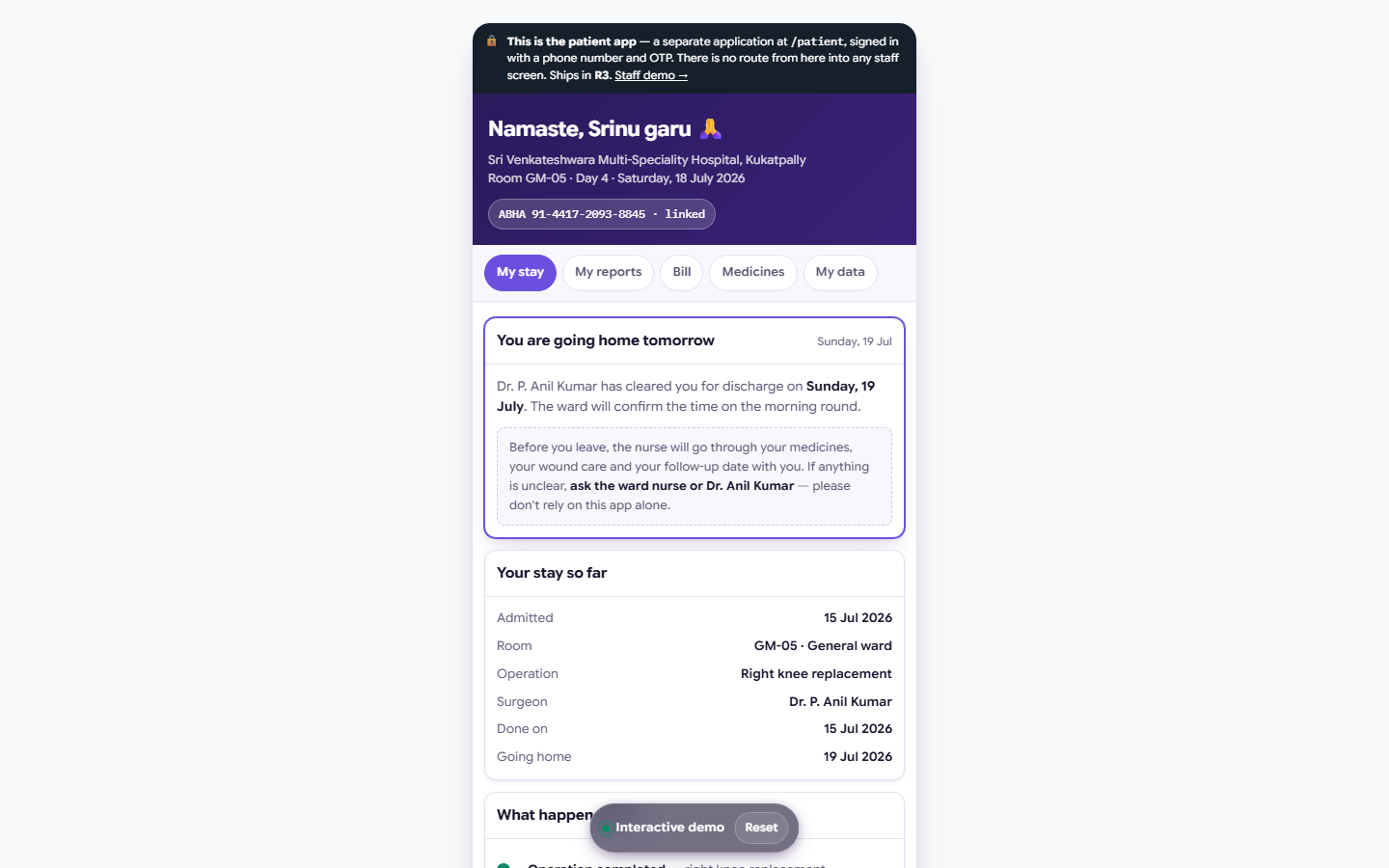
A ward nurse never sees the tariff master. The owner sees everything. A patient signs into a different app entirely and can never reach a staff screen.


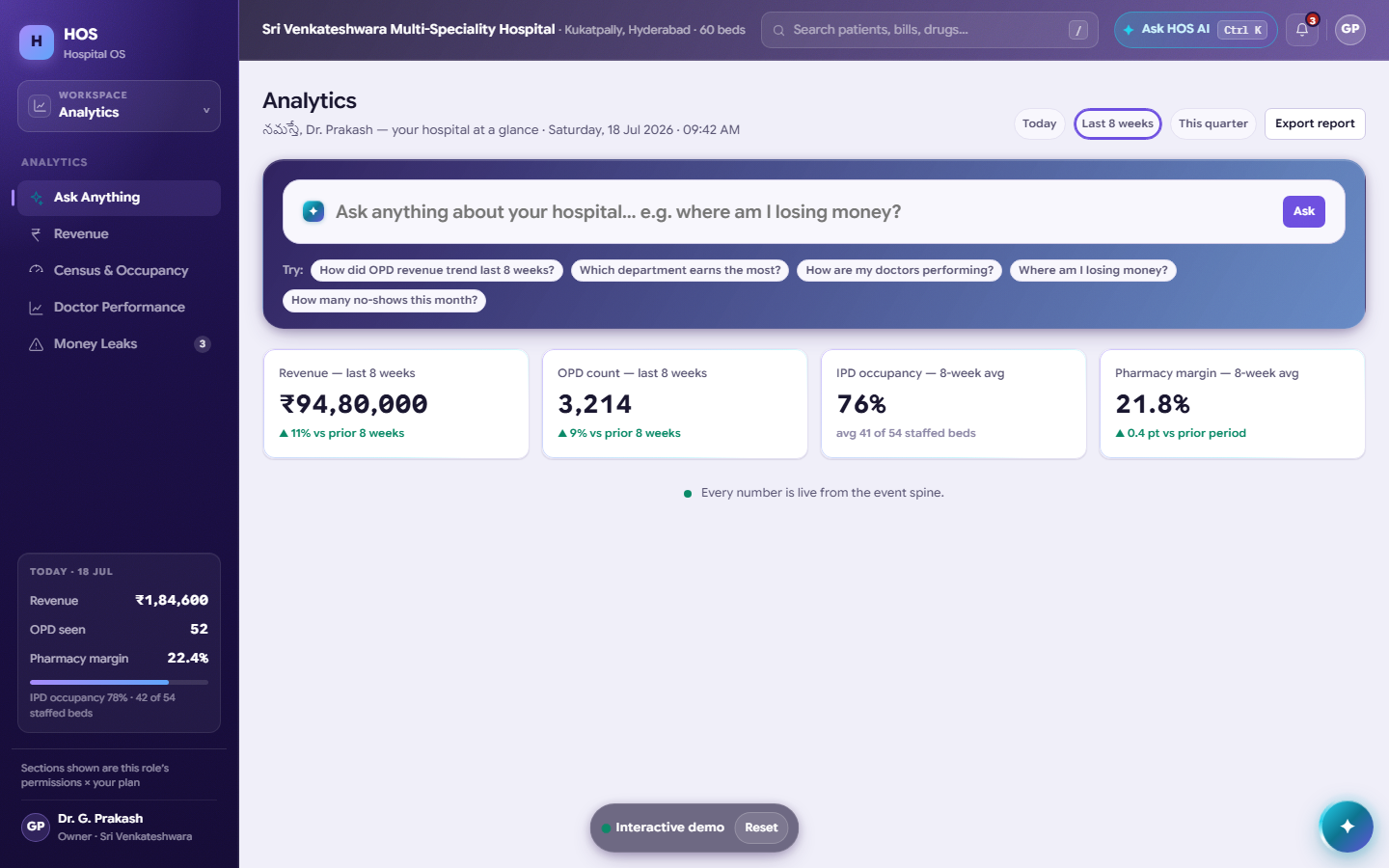
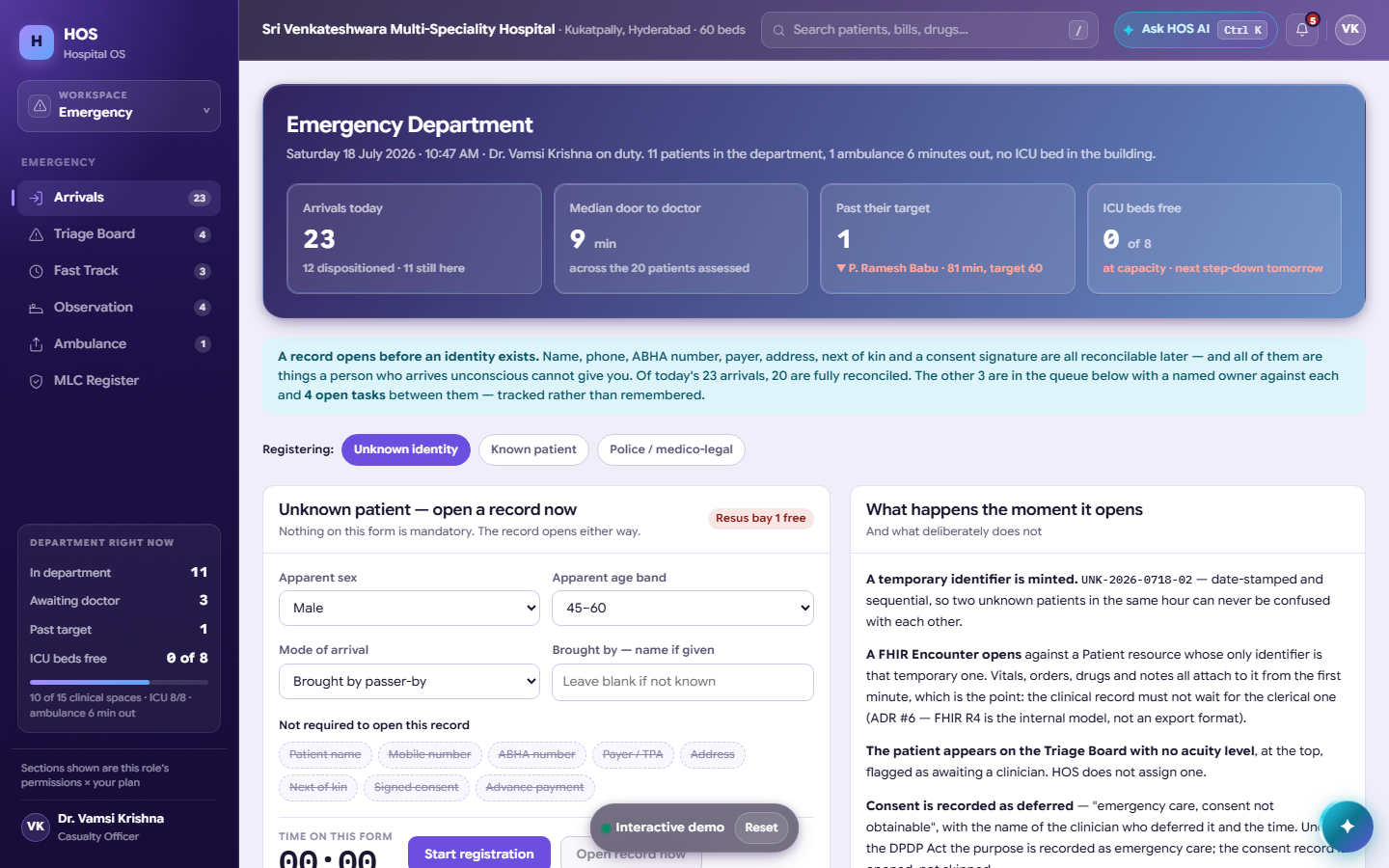
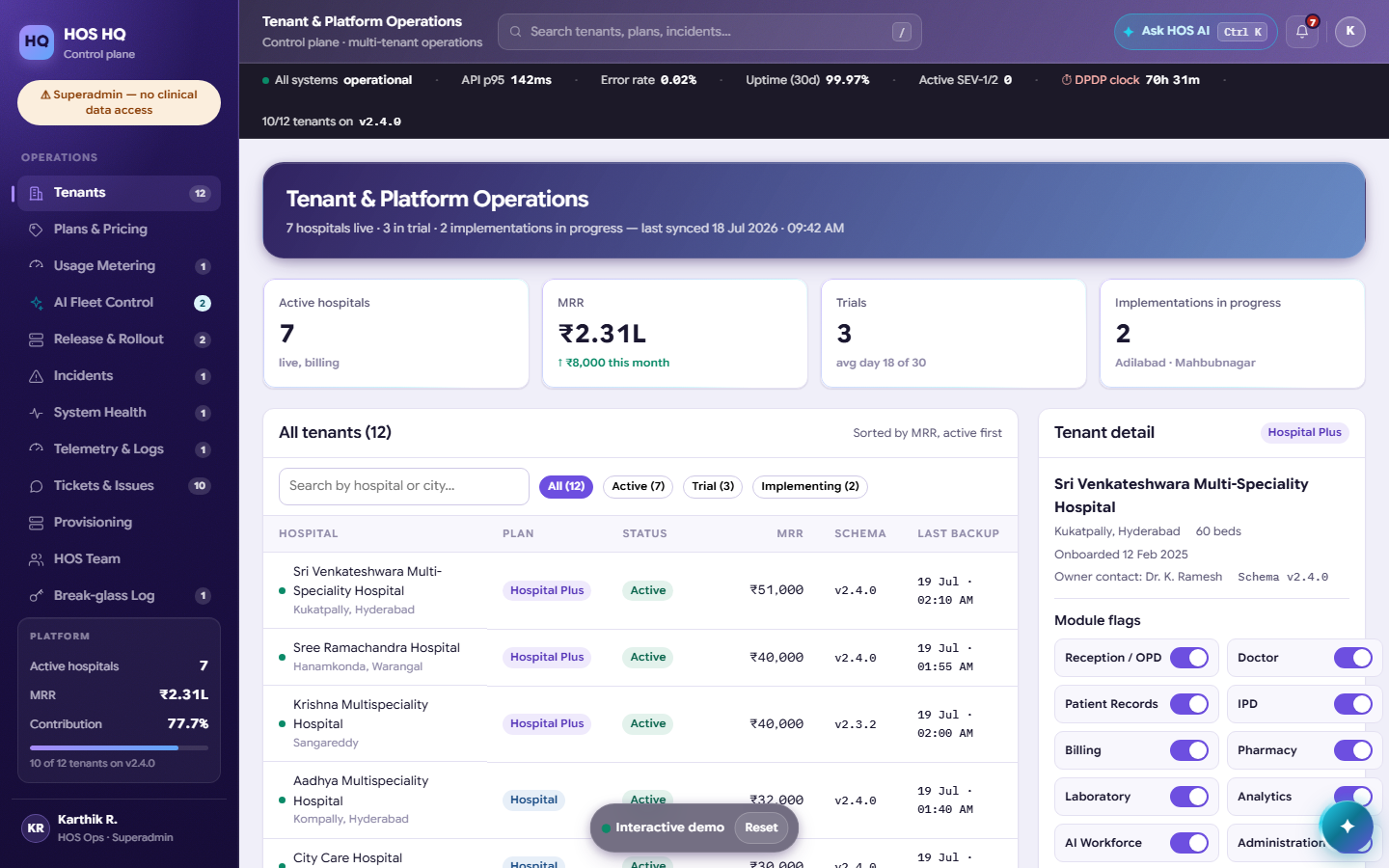
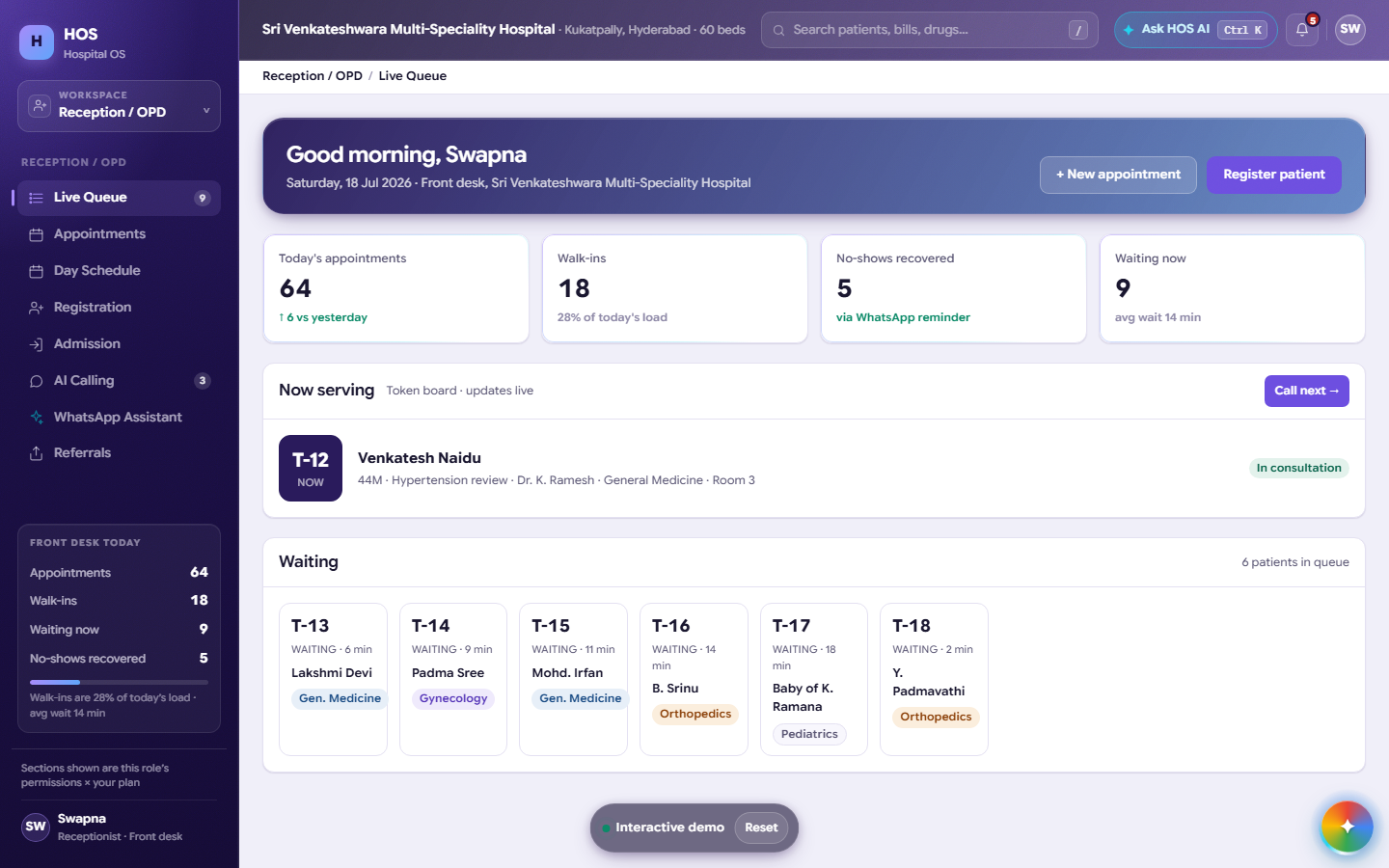
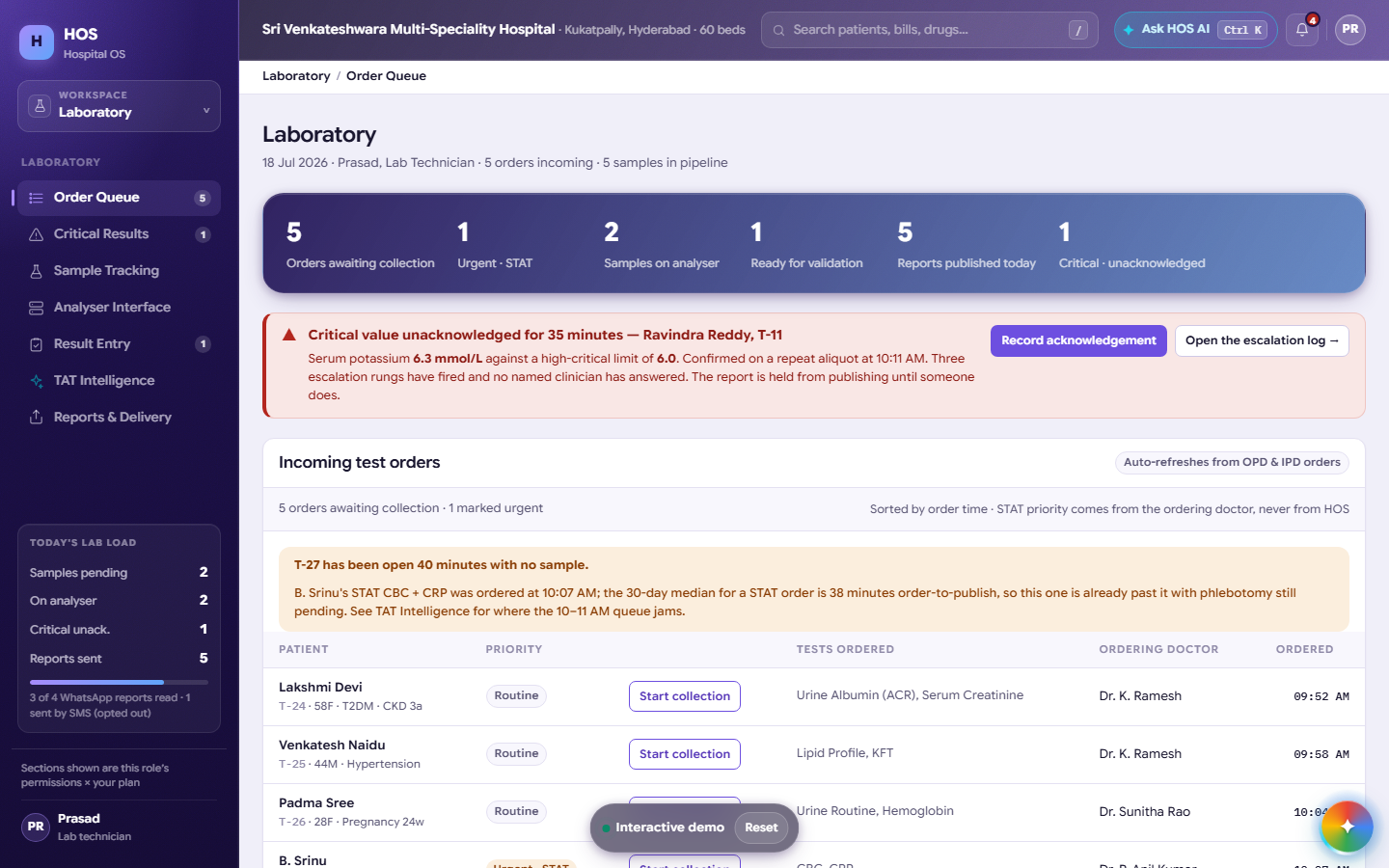
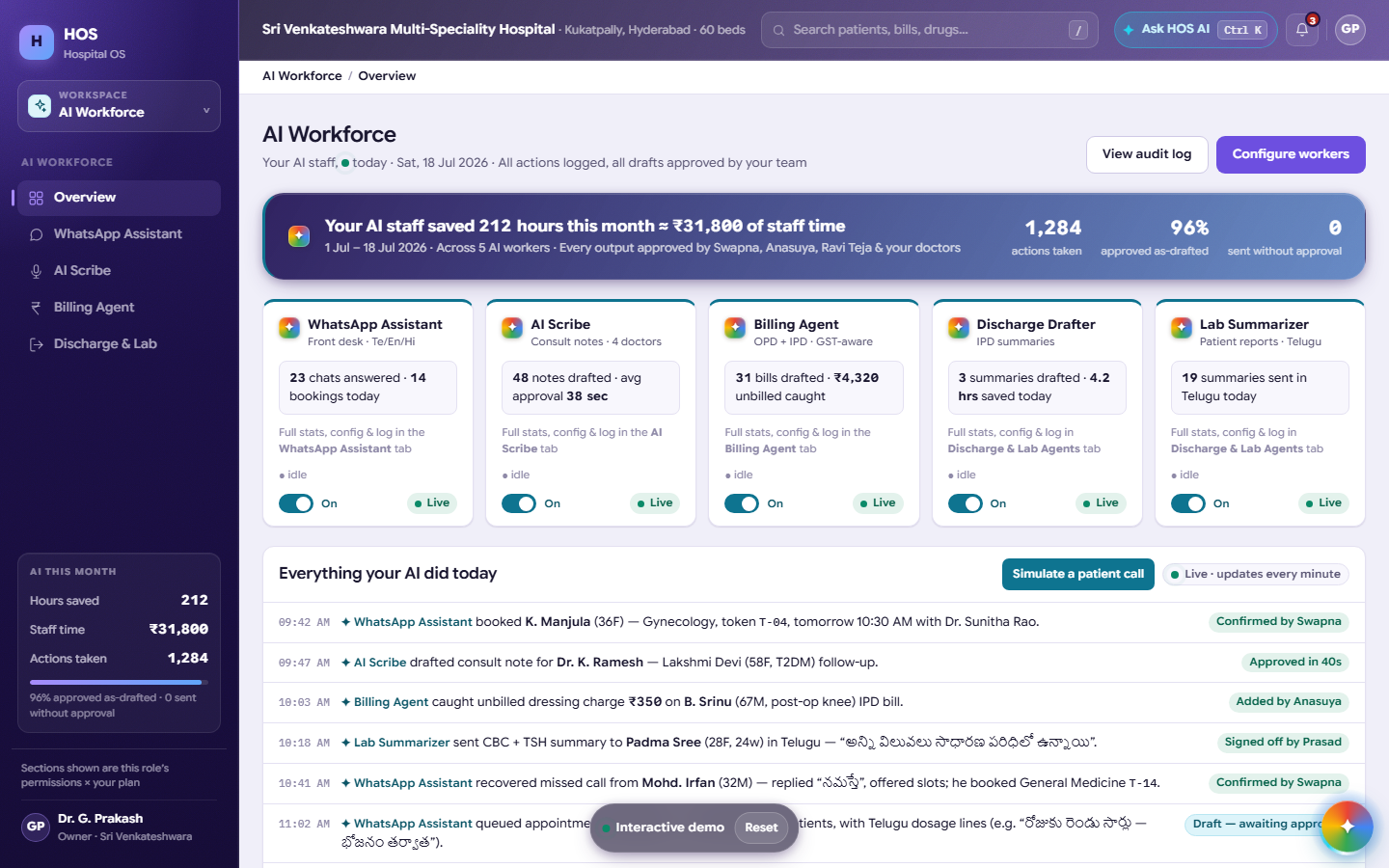
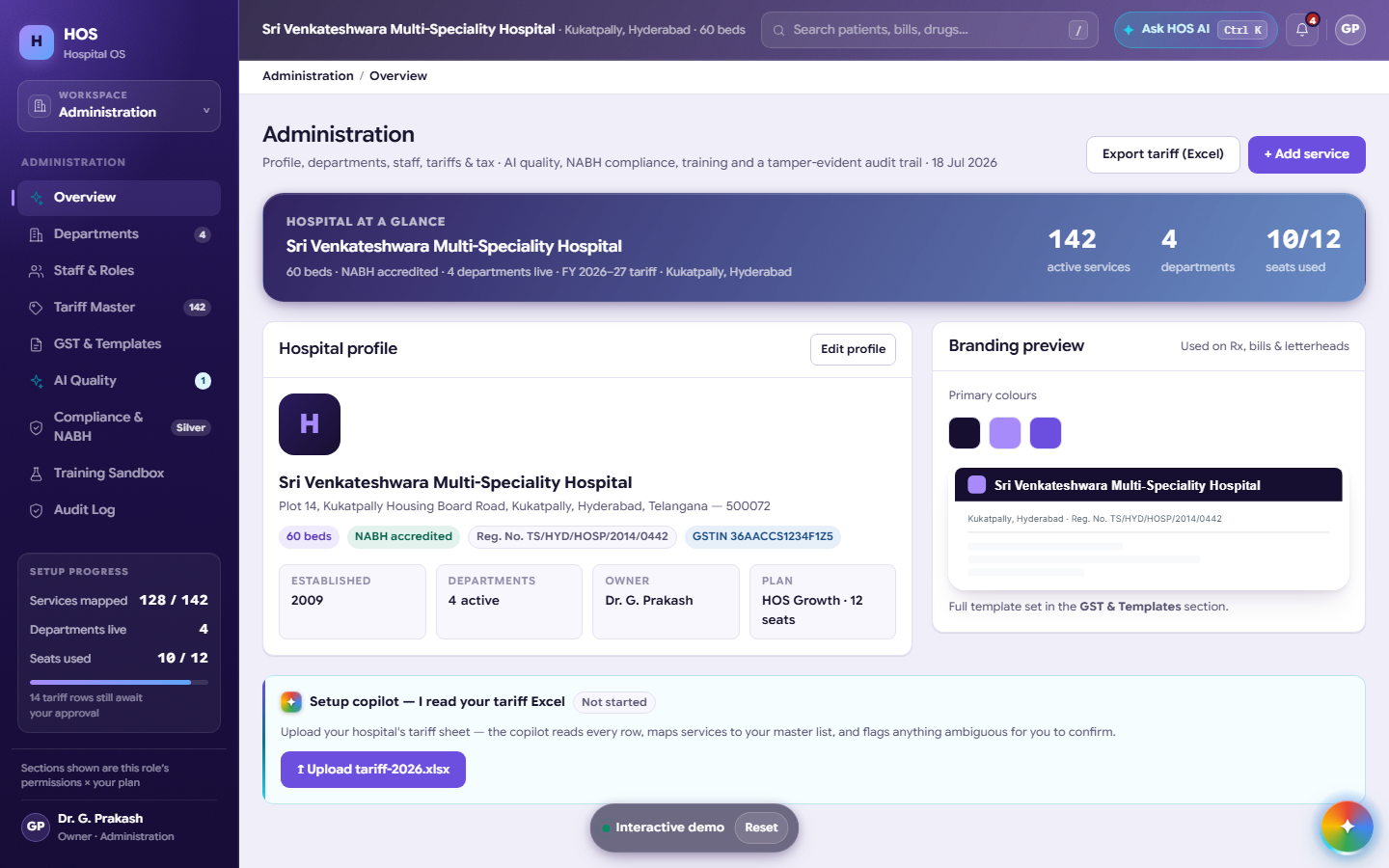
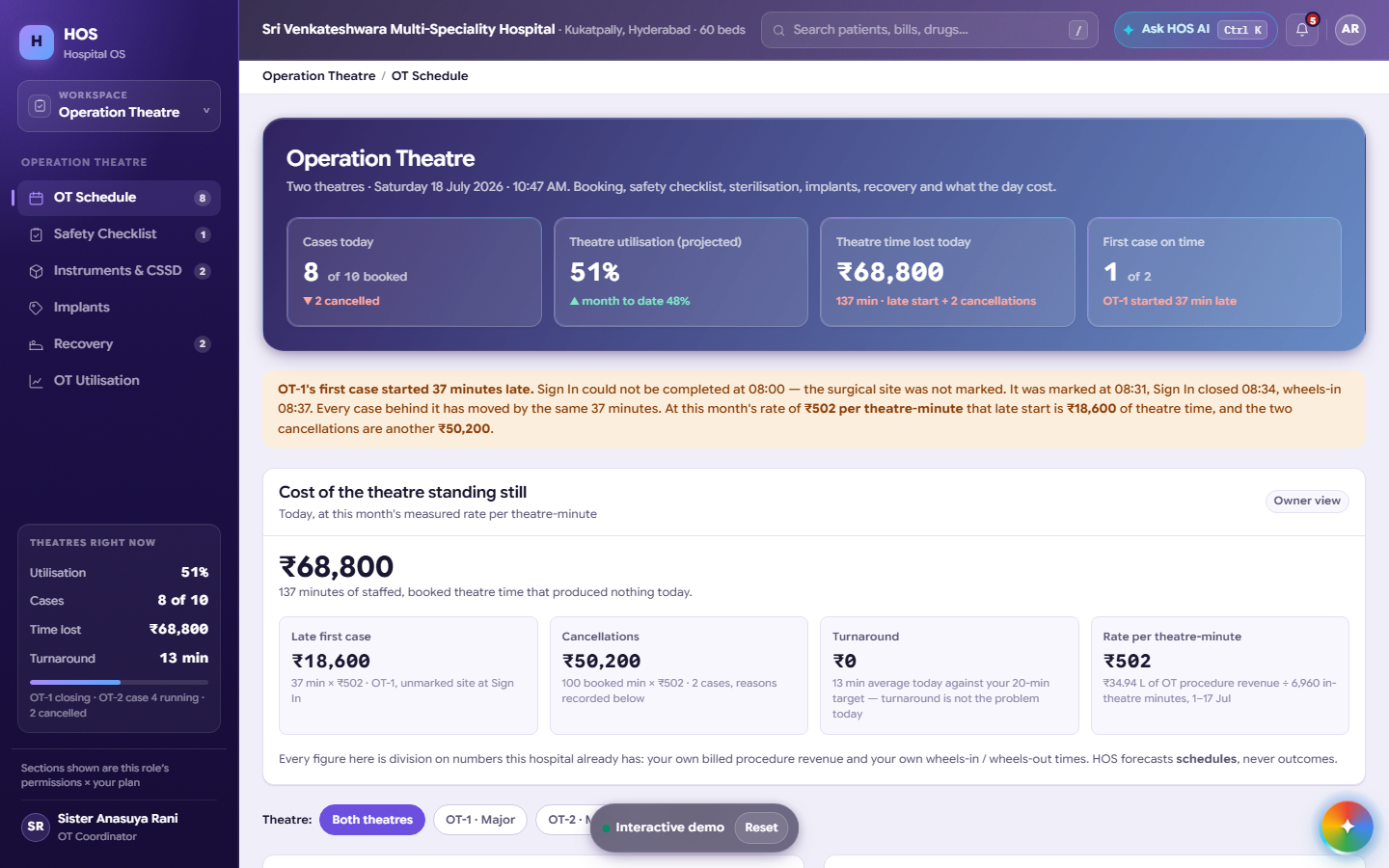
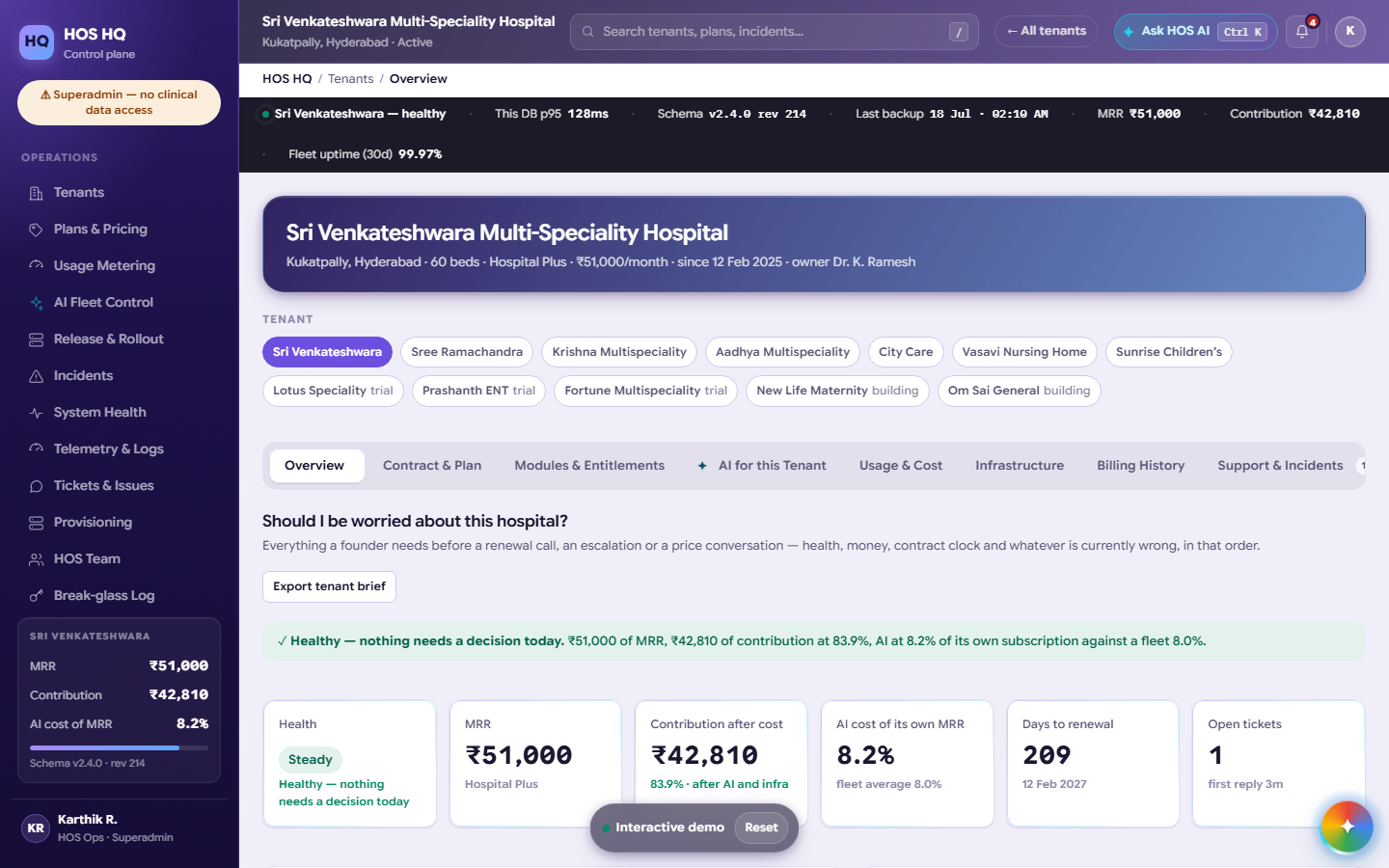
From the front desk to the control plane — every workspace shipped, every one a real screenshot, not a mockup of a mockup.


A patient signs in with a phone number and an OTP, to a different application. There is no route from it into any staff screen — that is a property of how the two are built, not a permission someone could flip.
A one-time implementation of ₹50,000–₹1,00,000 covers data migration, tariff mapping and staff training on the sandbox. The ABDM Digital Health Incentive Scheme may subsidise part of it.
The front-office voice agent (AI Calling) is not a separate line item — it ships as one agent with the WhatsApp assistant, because a hospital's front office is one job, not two products.
Every screen is clickable and every number on it reconciles. Pick a role — owner, doctor, nurse, or the platform team — and walk a real shift.